Being a pastoralist
The year 2026 is the International Year of Rangelands and Pastoralists. It offers a unique opportunity to showcase and celebrate the landscapes and people who shape Central Australia’s rangelands.
Covering around 75% of the country, the rangelands are closely associated with the outback and are deeply embedded in Australia’s culture and identity.
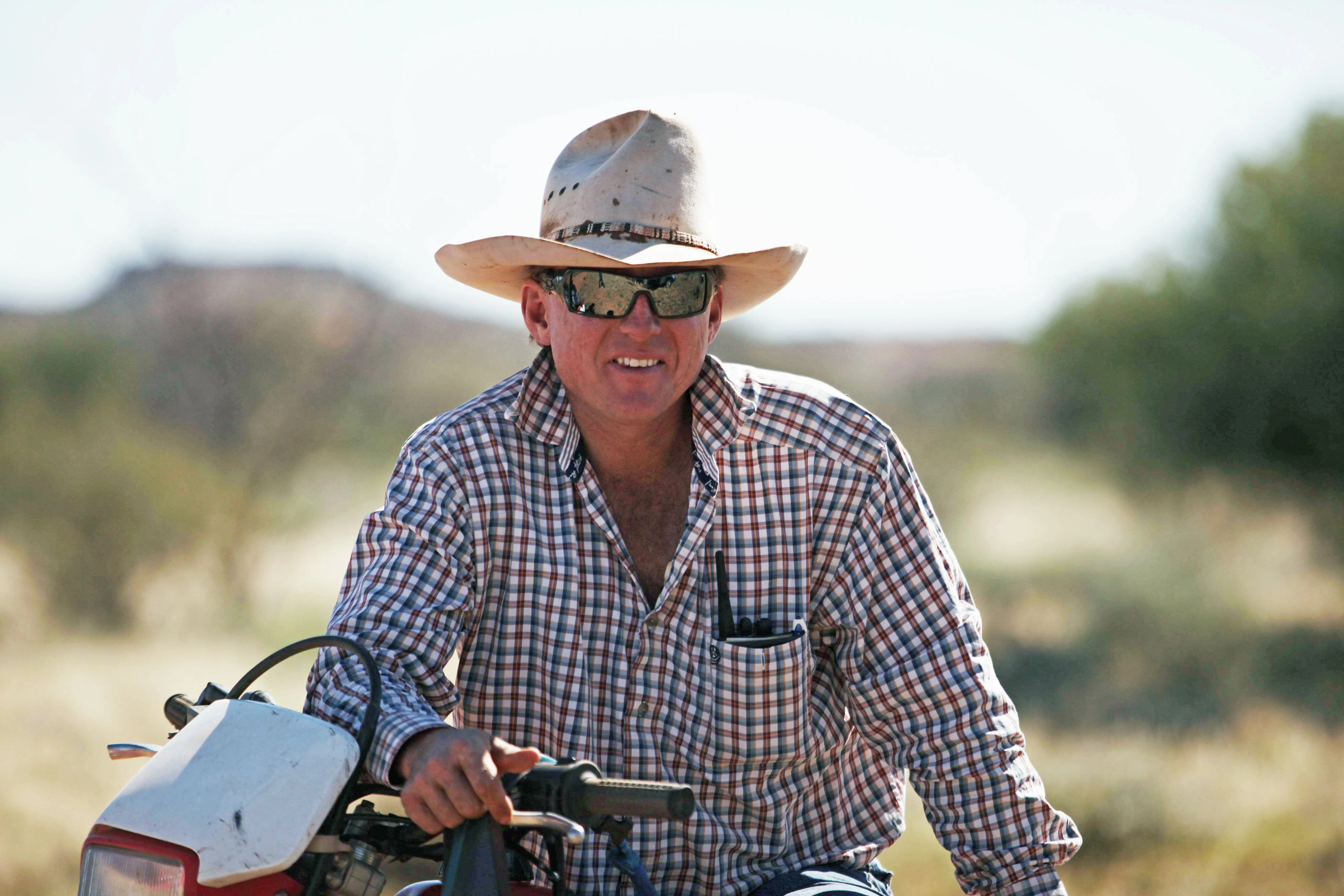
Recently, Central Australia-based livestock engagement officer Caleb Schwarz from the Department of Agriculture and Fisheries spoke with pastoralist Paul Smith, who manages Tieyon Station, to learn more about life on the land in Central Australia.
The first thing that stood out about Paul was his comforting demeanour. Worldly and unassuming, he carried a quiet authority. Dressed casually in a fishing shirt and thongs, and offering a welcoming handshake, he put you at ease immediately— non-imposing yet clearly possessing an unmistakable depth and thoughtfulness.
The opportunity to visit Tieyon Station, managed by Paul and his wife Jo on the South Australia–Northern Territory border, provided insight into what it means to be a pastoralist in this unique part of the country.
It is not a role that lends itself to a simple definition. It takes many forms, shaped by landscape, climate and the people within it. Paul described the layers of Australia—from urban and peri-urban areas, through cropping country and into remote regions. ‘If you keep heading further out, you get to us,’ Paul said.
It is a different world, with its own unspoken culture. People dress a certain way, place a premium on functional footwear and, almost without exception, drive a Toyota. Small details but telling ones. These are small but telling details—markers of a life shaped by practicality, distance and environment.
At the centre of it all is responsibility. ‘You value yourself on the health of your country and your herd,’ Paul said. ‘It affects you. And if you don’t like something, you make a change.’ It is a simple line, but it carries weight. There is no hiding. The country becomes a reflection of your changes, evolving with time and without apology.
After a harsh and dry January, rainfall in February and March delivered abundant pasture growth, resulting in a productive landscape dotted with calm Black Angus cattle. There was a sense of ease—shaped by many decisions over time. These decisions matter.
‘No one wants to decide anymore,’ Paul said. ‘No one wants to say yes or no, because no one has the confidence.’ In remote areas, decisions are unavoidable and the outcomes must be accepted.
When asked what he loves about his work, Paul did not hesitate. 'Being able to make and create is what I love. That calf goes on to feed us, and the surplus contributes to the nation.' It’s work that is tangible, meaningful and real.
In agriculture, change is constant. Expanding urban areas shift land use and country that once produced food is converted for housing. As a result, agriculture is pushed further into remote regions, while expectations on production continue to increase.
This is where the rangelands play a critical role.
'They are becoming more important,’ Paul said. ‘We are producing protein and energy in areas that cannot support cropping.’ Ruminant animals make this possible by converting tough vegetation into food.
‘What we are doing is not something people need to worry about,’ Paul said, referring to common misconceptions. In this landscape, well-managed grazing works with ecological processes rather than against them.
It is not just about production. Paul’s Nuffield Scholarship explored how to market distinctive, grass-fed beef from Central Australia under its own brand. ‘It has a unique taste,’ Paul said. ‘It is different.’ This reflects a broader goal of capturing provenance and building resilience in a variable production system.
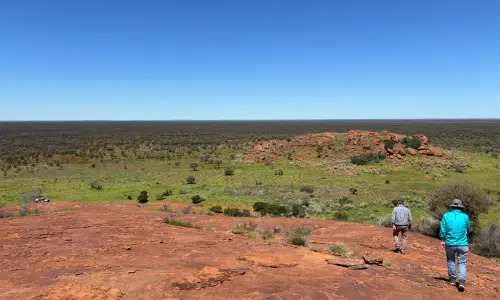
Equally important is care for the land. Paul described Mitchell grass, waterholes supporting shield shrimp, large flocks of budgerigars and the presence of culturally significant sites. Each reflects a balanced and functioning landscape.
‘The desert teaches you patience and observation,’ Paul said. These lessons shape both the land and the people who work it.
There is also a long-term perspective. Every decision draws from, or contributes to, what Paul described as the ‘environment bank’.
Being a pastoralist is not just about managing cattle. It is about stewardship—making informed decisions in uncertainty and maintaining a long-term commitment to the land. It requires patience, observation and responsibility, where cattle, country and people are closely connected.
Paul’s depth and thoughtfulness reflect a lifetime of experience shaped by these conditions.
Perhaps that is what it means to be a pastoralist.