Keeping watch: The Northern Territory’s H5 bird flu response
H5 bird flu was first detected in mainland Australia in June 2026 in a brown skua in Western Australia. Since then, 722 positive detection events have been recorded nationally across a range of wildlife species including gulls, terns, cormorants, raptors, owls, seals, dolphins and foxes. Significant wildlife mortality events have occurred in South Australia and Victoria, while approximately 3,000 wildlife birds have been vaccinated nationally.
There have been no detections of H5 bird flu in commercial poultry flocks or farm livestock in Australia, and the Northern Territory remains free of the disease.
Since H5 bird flu was first detected in Australia, the Northern Territory has strengthened preparedness, surveillance and stakeholder engagement through a cross-agency Incident Management Team. Activities include monitoring wild birds at priority wetlands, partnering with Parks and Wildlife and NAQS, and contributing data to national surveillance programs coordinated by Wildlife Health Australia
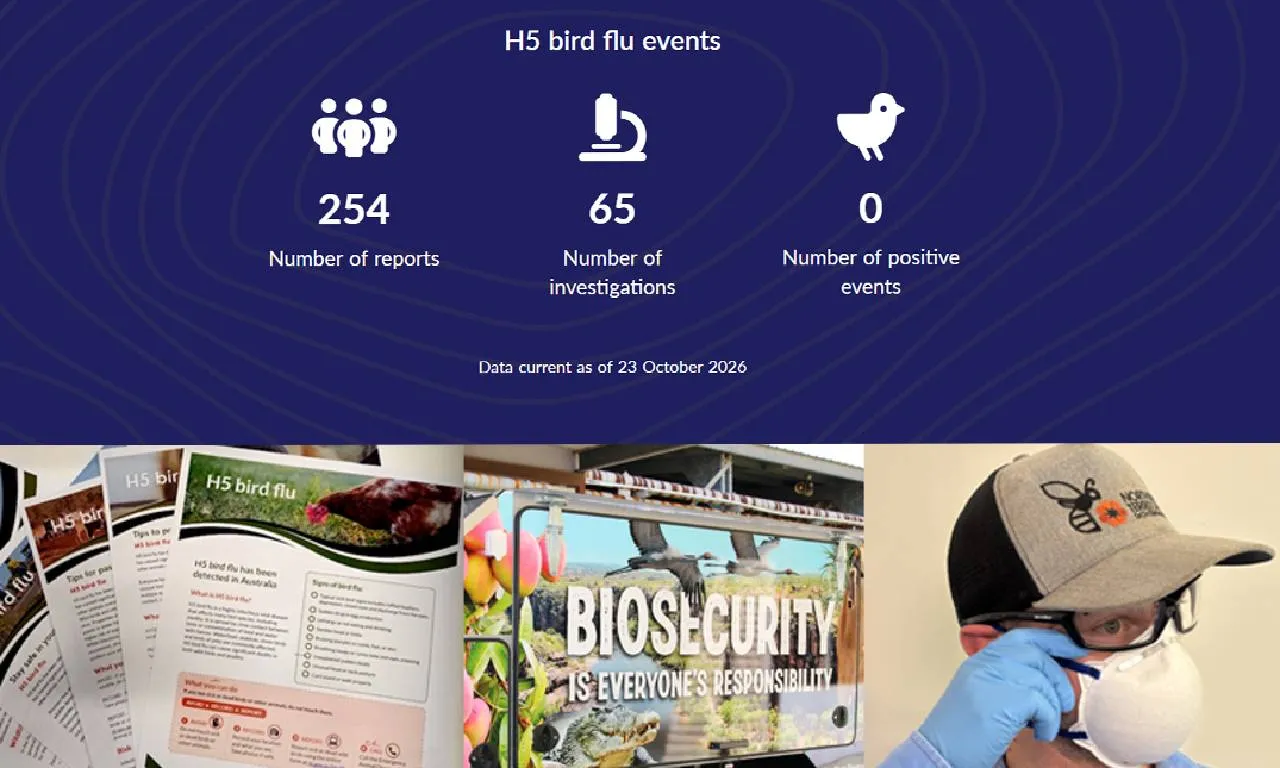
To date, the Northern Territory has responded to 254 calls to the bird flu hotline and undertaken 65 investigations, with no positive detections recorded.
Landholders can help reduce the risk of disease exposure by securing feed and water sources, cleaning equipment and vehicles, and minimising contact between livestock and wild birds. If dead birds are found, avoid handling them unless necessary and follow recommended disposal practices, which may include burial, binning or incineration where permitted.
Territory-specific information, fact sheets and videos are available on the NT Government website.