Graduate research supports development of Fusarium-resistant snake beans
Fusarium wilt can cause crop losses of up to 90% in snake bean production in the Darwin region, posing a major challenge for vegetable growers. A graduate-led research project by Isla McDonald is identifying Fusarium wilt-resistant parent lines to support the snake bean breeding trial as part of the Breeding Better Vegetables project.
NTG Graduate Officer, Isla McDonald, is working with Horticultural Scientist Doris Marcsik to identify cowpea varieties with natural resistance to Fusarium wilt caused by Fusarium oxysporum f. sp. tracheiphilum (FOT), a soil-borne fungal disease that poses a challenge to snake bean production in the Top End.
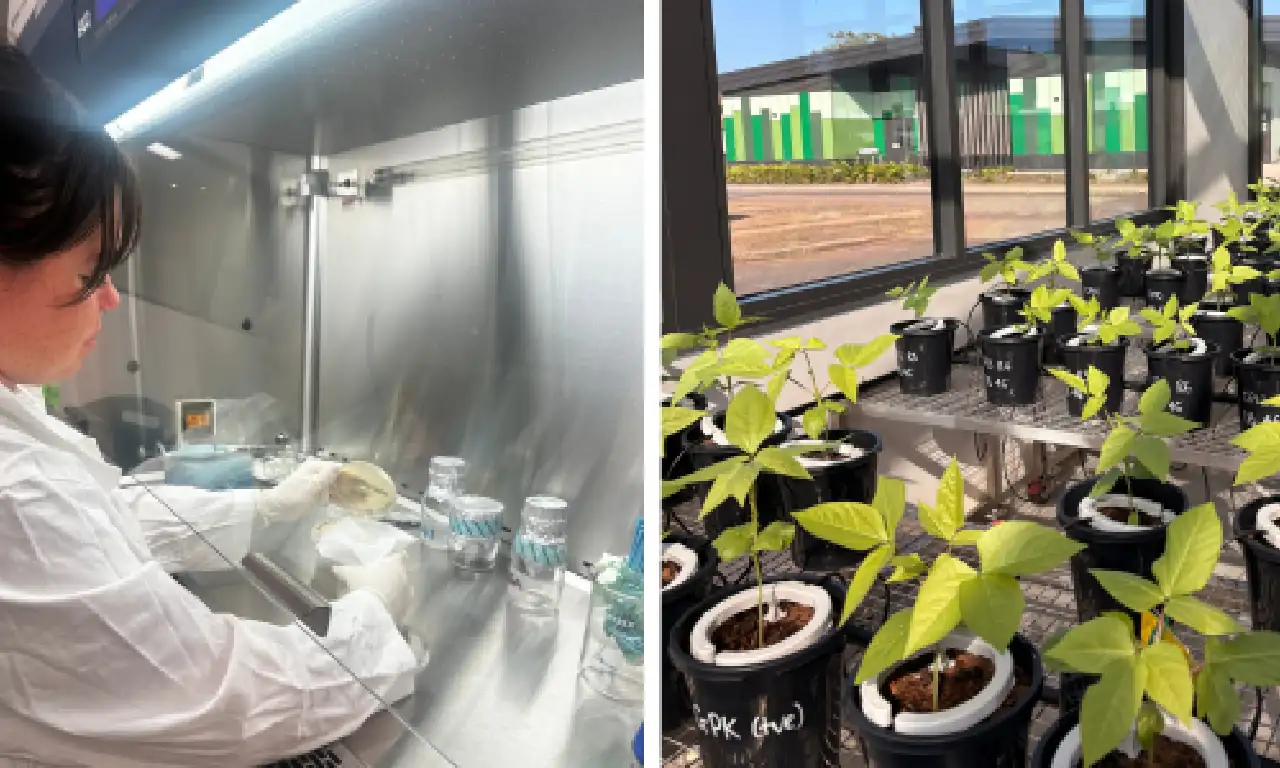
As part of the project, Isla is conducting glasshouse trials to screen different cowpea varieties for Fusarium wilt-resistance. Plants are inoculated with FOT, monitored and scored for disease severity to identify which varieties exhibit resistance.
To date, the findings from the glasshouse disease screening trials have identified two cowpea varieties with high level of resistance to Fusarium wilt. This research work provides Doris with valuable data to help select suitable parent lines for the breeding phase of the project.
For Isla, the project has provided her with a hands-on introduction to applied agricultural research through the NTG Graduate Program. Combining horticulture and plant pathology, her research work is helping address a key challenge for the NT vegetable industry, while building practical skills in disease screening and biosecurity.