Field sampling sets the foundation for Gulkula Mine rehabilitation
In April 2026, project partners gathered at the Gulkula Mine in East Arnhem Land for a preliminary site evaluation supporting the AFWI-funded ‘Darwin Stringybark Plantation Forestry on Bauxite Mine Rehabilitation in Northern Australia’ project.
Conducted from 7–10 April, the activity marked an important step toward understanding how Darwin stringybark (Eucalyptus tetrodonta) can be successfully established on rehabilitated bauxite mine sites, helping to inform future mine rehabilitation practices across northern Australia.
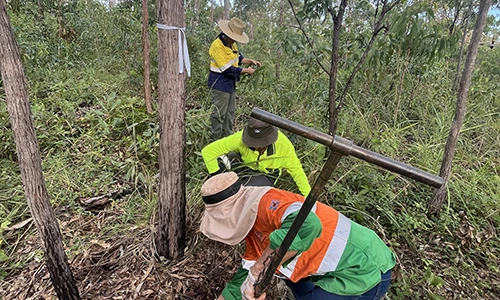
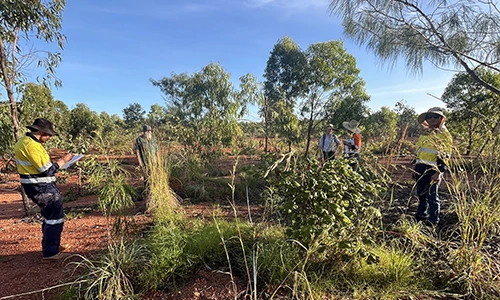
The fieldwork brought together researchers, industry representatives, and local stakeholders from Gulkula Mining Company, the Northern Territory Department of Agriculture and Fisheries, the University of the Sunshine Coast, the Aluminium Stewardship Initiative (ASI), the University of Queensland, and Northern Territory Ord Valley Foresty Hub. The team undertook site assessments, soil sampling, and vegetation surveys across both native forest reference areas and rehabilitated mine sites.
A key objective was to establish a robust baseline dataset that will assist in tracking the long-term growth and health of Darwin stringybark plantations. Permanent monitoring transects previously established by Gulkula staff were revisited, GPS-marked, and refined to ensure consistent future monitoring. These transects span rehabilitation sites of varying ages (1-8-years old), alongside native forests that provide points of reference and benchmarks for ecological recovery.
Researchers also assessed terrain, vegetation structure, plant diversity, tree density, litter cover, and evidence of erosion. These variables and recent impacts from cyclone Narelle were incorporated into assessments to better understand climate-related risks and resilience. Measurements of tree height and stem diameter were collected to help link plantation productivity with environmental conditions. Soil and foliar samples were also collected to evaluate soil health and tree nutrition.
The information collected will help identify the factors that influence plantation success on rehabilitated mine sites. The findings are expected to support more effective mine rehabilitation strategies, contributing to support of livelihoods of First Nations people affected by mining operations through the restoration of productive and resilient landscapes following mining activities.