Cropping Team replants after Big Rivers floods devastate crop trials
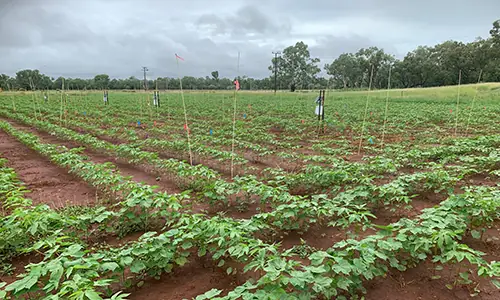
The March 2026 flooding in Katherine resulted in extensive inundation of cotton and sesame plots at Katherine Research Station. Replanting of cotton micro-trials and sesame is underway.
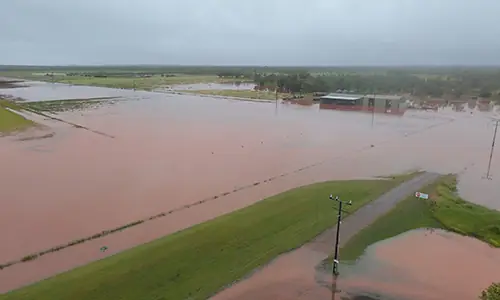
The March 2026 flooding across Katherine and the wider Big Rivers region caused major damage to infrastructure and displaced thousands of residents.
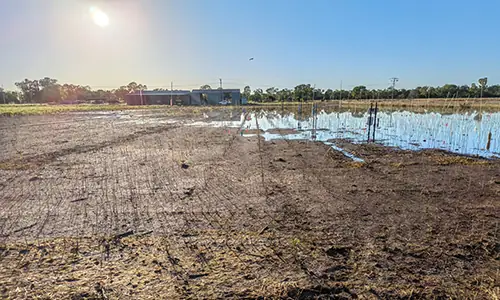
Although the Department of Agriculture and Fisheries Katherine Research Station initially escaped inundation due to its distance from the Katherine River, the later overflow of Tindal Creek flooded research paddocks and part of the office complex.
Much of the station’s cropping area is low‑lying and remained underwater long after floodwaters elsewhere had receded. The newly planted sesame trial was completely drowned, as were the cotton row configuration, cover crop, and student research plots. Monitoring equipment installed in the latter was also destroyed.
Thanks to the Cropping Team’s earlier data collection, valuable establishment and initial agronomic measurements had already been secured before the floods, preserving critical baseline information even as growth and yield data were rendered unrecoverable.
The team moved quickly into recovery mode. Affected paddocks have been rehabilitated through ploughing to relieve soil compaction and targeted herbicide applications to suppress emerging weeds.
While it is now too late in the season to replant the cotton cover crop and row configuration trials, student micro‑plots are being re‑established in an alternative field. Dry season sesame and fennel plantings are also underway, ensuring research momentum continues.
Despite the setback, the Cropping Team’s broader program remains on track. Data collection continues at a surviving cotton nutrient trial in Katherine and at the Douglas Daly Research Farm, which was largely unaffected by the floods.
An additional industrial hemp trial has been planted on schedule, and the team is proceeding with a full calendar of broadacre research projects, extension activities, workshops and conference engagements throughout 2026.