Building northern capacity in eDNA metabarcoding
Darwin recently hosted a rare and highly specialised training opportunity, with leading molecular scientists gathering to strengthen environmental DNA (eDNA) capability across northern Australia.
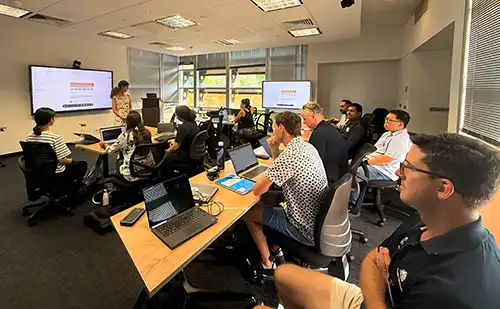
Dr Sonu Yadav, principal molecular scientist from the Department of Agriculture and Fisheries (DAF), delivered a 2‑day introductory workshop on DNA/eDNA metabarcoding earlier this month.
The hands‑on workshop provided participants with practical experience in DNA and eDNA metabarcoding data analysis – an emerging tool transforming biosecurity, biodiversity monitoring and environmental management.
Designed to strengthen technical capacity in the north, the workshop combined theoretical foundations with applied bioinformatics training. Participants gained valuable insights into:
- best‑practice approaches for generating high‑quality molecular data
- using analysis platforms for metabarcoding workflows
- interpreting sequence data for biosecurity and biomonitoring applications
- real‑world case studies demonstrating application of this technique in the north.
The practical sessions were led by Dr Christine Chivas and Professor Anthony Chariton from Macquarie University, who generously shared their expertise and guided participants through hands‑on data analysis exercises. Their support ensured attendees left with skills they can directly apply within their own current and future programs.
The workshop brought together a diverse group of professionals working across biosecurity, fisheries, environmental monitoring and research. Attendees included representatives from:
- Charles Darwin University
- the Office of the Supervisory Scientist (Department of Climate Change, Energy, the Environment and Water)
- plant biosecurity staff from the Northern Territory and Western Australian governments
- scientists from DAF Fisheries and the Department of Lands, Planning and Environment.
This cross‑sector collaboration reflects the growing importance of molecular tools in safeguarding northern Australia’s environment and industries.
The event was supported by colleagues from the Northern Australia Biosecurity Strategy (funding support), the Office of the Supervisory Scientist, Macquarie University and Charles Darwin University, demonstrating a strong commitment to building regional capability and fostering collaboration.
By investing in training and knowledge sharing, the workshop has helped strengthen the north’s ability to detect, monitor and respond to biosecurity and environmental challenges using cutting‑edge molecular techniques.