A big step forward for Browsing Ant eradication surveillance
The National Browsing Ant Eradication Program NT has reached a big milestone. The team has completed 12-month post-treatment surveillance at a remote mine site, using trained odour detection dogs in some tough country.
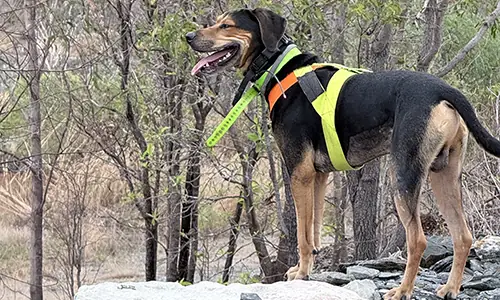
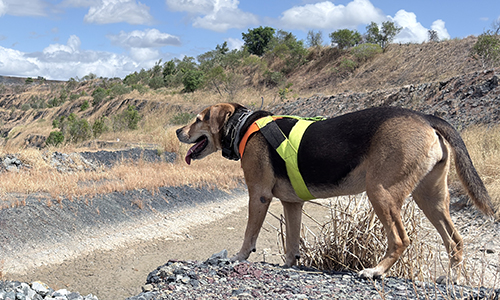
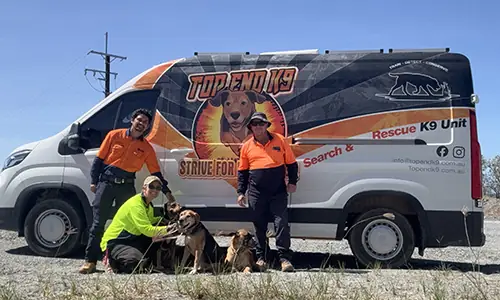
The site wasn’t easy. There were rock stockpiles, steep slopes, dense bush and places that were hard to reach. Hot and humid conditions made the fieldwork even more difficult. That made normal survey work more challenging. So, to strengthen the surveillance, three trained detection dogs, Jaeger, Ryker and Scout, worked with their handlers, field staff and an entomologist to search for any remaining signs of target ants.
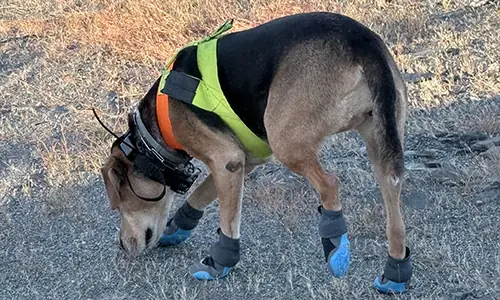
Why use odour detection dogs? Because they can pick up scents that people and standard survey methods can miss. They can work across difficult ground, respond to subtle odours, and help build more confidence in the surveillance result, especially in a site like this.
During the deployment, the team worked through the accessible areas in a planned way. The landscape was rugged, but coverage still mattered. The dogs stayed focused and adapted well, even with warm and windy field conditions.
This is a strong step forward in the proof-of-eradication process. Over the coming months, surveillance will continue to help maintain confidence that the site remains free of browsing ants.
And really, this kind of work doesn’t happen by chance. It takes smart tools, skilled people, regular monitoring by the surveillance team, in-house assistance, and strong coordination and collaboration with stakeholders to protect agriculture and the environment from invasive species.