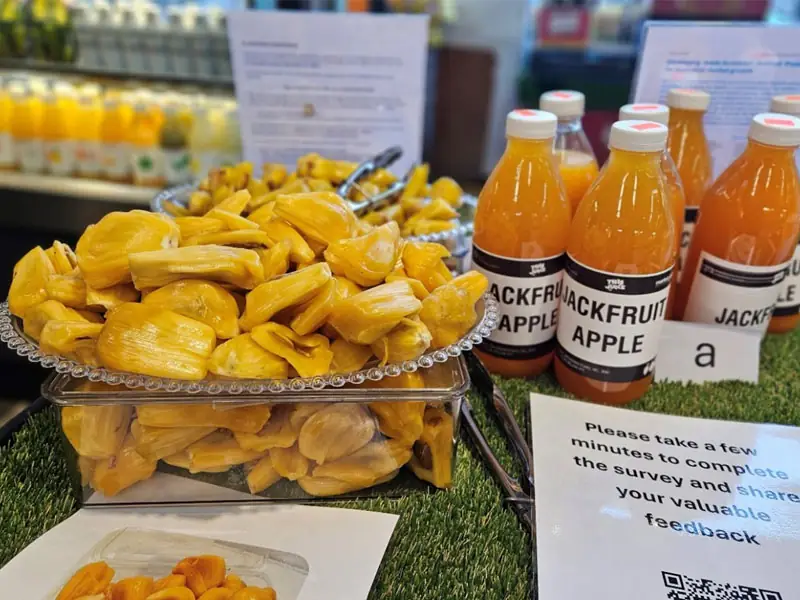
Jackfruit trials show promising consumer acceptance
Over the past 20 years a number of reports have consistently identified similar roadblocks for the domestic jackfruit industry: market acceptance and consumer behaviour.
A single piece of jackfruit can grow to more than 20kg, and like many other large fruit and vegetables their size and cumbersome nature make them unappealing. Australian consumers are increasingly prioritising convenience, preferring “fresh cut”, lunchbox and snack sized produce.
As part of the “Developing ready to market jackfruit products for Australian market growth” project, the Department of Agriculture and Fisheries, Northern Territory (NT DAF) recently showcased Northern Territory grown jackfruit products in the Queen Victoria Markets, Melbourne. The project, funded by AgriFutures Australia, is led by the NT DAF and supported by the University of Melbourne. Melbourne consumers had the chance to sample fresh jackfruit produced in the Territory providing context for consumer preferences and potential pricing. The local jackfruit industry is currently worth $2m a year, with the creation of new products. such as jackfruit juice and packaged arils an opportunity to grow the domestic market.
Two jackfruit products were offered to consumers at Queens Harvest, in Queens Victoria Market to taste test as part of the project. Queens Harvest, which has a strong focus on fresh produce, acknowledged the customer feedback “this is the fruit I’d like to see more accessible, loved it,” while another added, “never tried the juice before, tastes amazing” highlighting the growing potential for jackfruit in the domestic market and its appeal to new consumers.
In total 130 consumers were invited to share their feedback on the product, commenting on its taste, aroma, and overall appeal, as well as their likelihood of purchasing a similar product in the future. The initiative focused on raising product awareness, assessing consumer acceptance, and creating a pathway to establish a supply chain that maximises the value of the fruit. Feedback was overwhelmingly positive. Many participants (38%) had never tried jackfruit before, due to limited availability, suggesting that the domestic market still has room for growth.
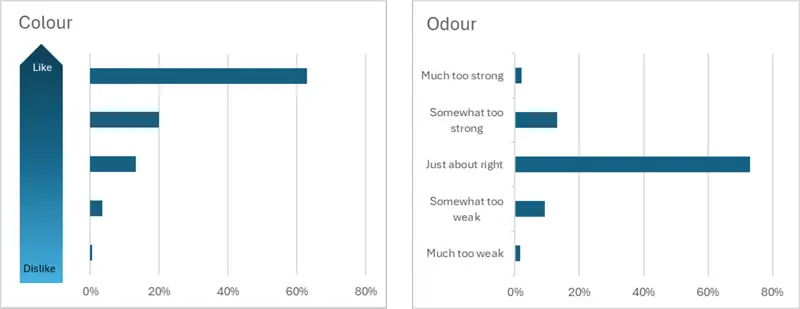
Figure 1. Consumers were surveyed on how much they liked the colour (left) and odour (right) of the jackfruit samples.
Most consumers loved the colour of the jackfruit and over 60% were pleased with its aroma, with only a small proportion finding it too strong or too weak. Purchase interest was strong, with the majority likely or extremely likely to recommend jackfruit to a family member. Likewise, the majority were likely or extremely likely to purchase one of the jackfruit products they sampled.
This retail trial is one small step in the process of turning high-quality, value-added Australian jackfruit products into reality.
Building on this success, the next phase of the project will focus on refining product development, improving processing efficiency, and expanding the Australian jackfruit market. As processing jackfruit is labour-intensive, efforts are underway to explore innovative techniques and technologies to make handling and packaging more efficient. Together, these initiatives are paving the way for the Northern Territory to become a leading supplier of high-quality, ready-to-market jackfruit products, strengthening the national footprint of Australia’s growing jackfruit industry.
Author: Dr. Induni Vijaya Kumar